This is general fashion and lifestyle information. Fit, comfort, dress codes, budgets, and beauty routines are personal. Verify product measurements, materials, care instructions, and return terms before buying.
Illustrative photograph of a wardrobe; it does not show a tested outfit or the printable.
An outfit planner printable is most useful when it records the day you actually have: weather, walking, dress expectations and what is clean. Use the free working sheet below to plan from clothes you own, then record what you really wore. The feedback column helps you change a practical detail next time instead of buying an entirely new outfit.
The sheet is an original blank planning tool. It offers no body-shape rules or promise that one combination suits everyone. Comfort, mobility, personal style and the requirements of the occasion guide the decisions. You can use one row per day or keep separate rows for two very different parts of a day.
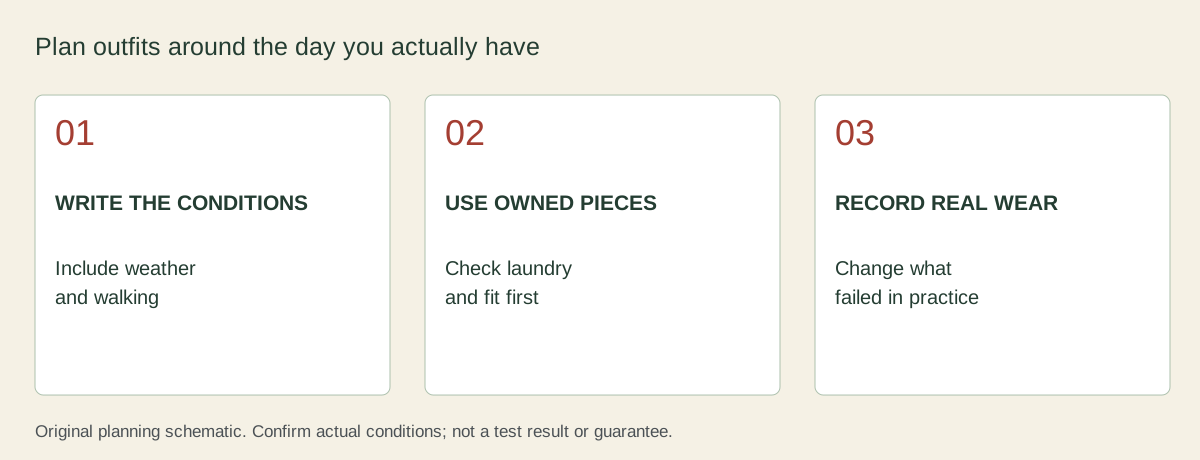
Write the conditions before choosing pieces
Start with the occasion, expected indoor and outdoor conditions, and how you will travel. A day with a long walk and a formal meeting has different needs from a short drive to a casual lunch. Write the actual requirements rather than a vague label such as “smart.” Check the forecast close to the day, because a week-ahead plan may need a rain adjustment.
Use the rainy-day outfit notes when footwear, wet hems or drying time could change the choice. A forecast note is a planning assumption, not a guarantee. Keep an alternative for a cancelled outdoor plan or a layer that turns out too warm indoors.
Build a complete combination from owned items
Choose the main pieces, shoes and an outer layer, then check that each item is available. A plan that depends on trousers still at the cleaner is unfinished. Include underwear or other layers when they affect comfort or the fit of the chosen clothes. You do not need to photograph yourself to use the sheet; an item description can be enough.
| Planning field | A useful entry | What to check |
|---|---|---|
| Occasion | Office presentation, then walk home | Actual dress expectations and travel |
| Conditions | Cool morning, heated building | Layer can be carried or removed |
| Owned pieces | Named top, trousers, shoes and coat | Clean, ready and comfortable together |
| Alternative | Different shoes if rain arrives | Available before leaving |
| After wearing | Sleeve caught on desk edge | One change for the next similar day |
The entries above are fictional illustrations. Test the actual outfit by sitting, reaching and walking as appropriate. A clothing photo cannot prove that shoes will be comfortable for your route. Use an option you already know works when there is no time to check a new combination.
Repeat a formula instead of planning from zero
The three everyday outfit formulas provide a starting structure. Copy a combination you like into the next suitable day, then change the layer or footwear for the conditions. Repeating clothes is a practical choice; this sheet does not require seven different looks or a new purchase for every event.
Keep a short note about laundry and repair. If an item repeatedly falls out of the plan because it needs attention, put the task on a separate household list. A planner should reveal the missing action rather than silently assuming the item will be ready tomorrow.
Add feedback after a real day of wear
Record the outfit actually worn, one comfort observation and one decision for next time. “Too warm on the train; use the lighter layer” gives you something to act on. “Bad outfit” does not explain what to change. Avoid turning the record into a judgement of your body or a public performance score.
If your work or event has specific safety or dress requirements, confirm them with the responsible organiser. Personal styling advice cannot override protective clothing rules. For ordinary clothing care, follow the garment's own label and seek specialist advice where the material or finish needs it.
Print your weekly sheet
Open the outfit planner and wear-notes sheet. It has space for seven days, weather and occasion notes, owned pieces, a fallback and actual-wear feedback. Type into the blank cells and print or save a PDF. The page does not save entries after reload or send your wardrobe information anywhere.
Day / occasion / travel and weather:
Owned main pieces / shoes / outer layer:
Laundry or repair needed before wearing:
Fallback if the plan changes:
Actually worn / comfort observation:
One change for the next similar day:
Review the sheet before your next week begins. Keep combinations that worked and solve the specific problems that recurred. The aim is a usable wardrobe record, with enough flexibility for changing plans, rather than a perfect schedule that makes ordinary mornings harder.